

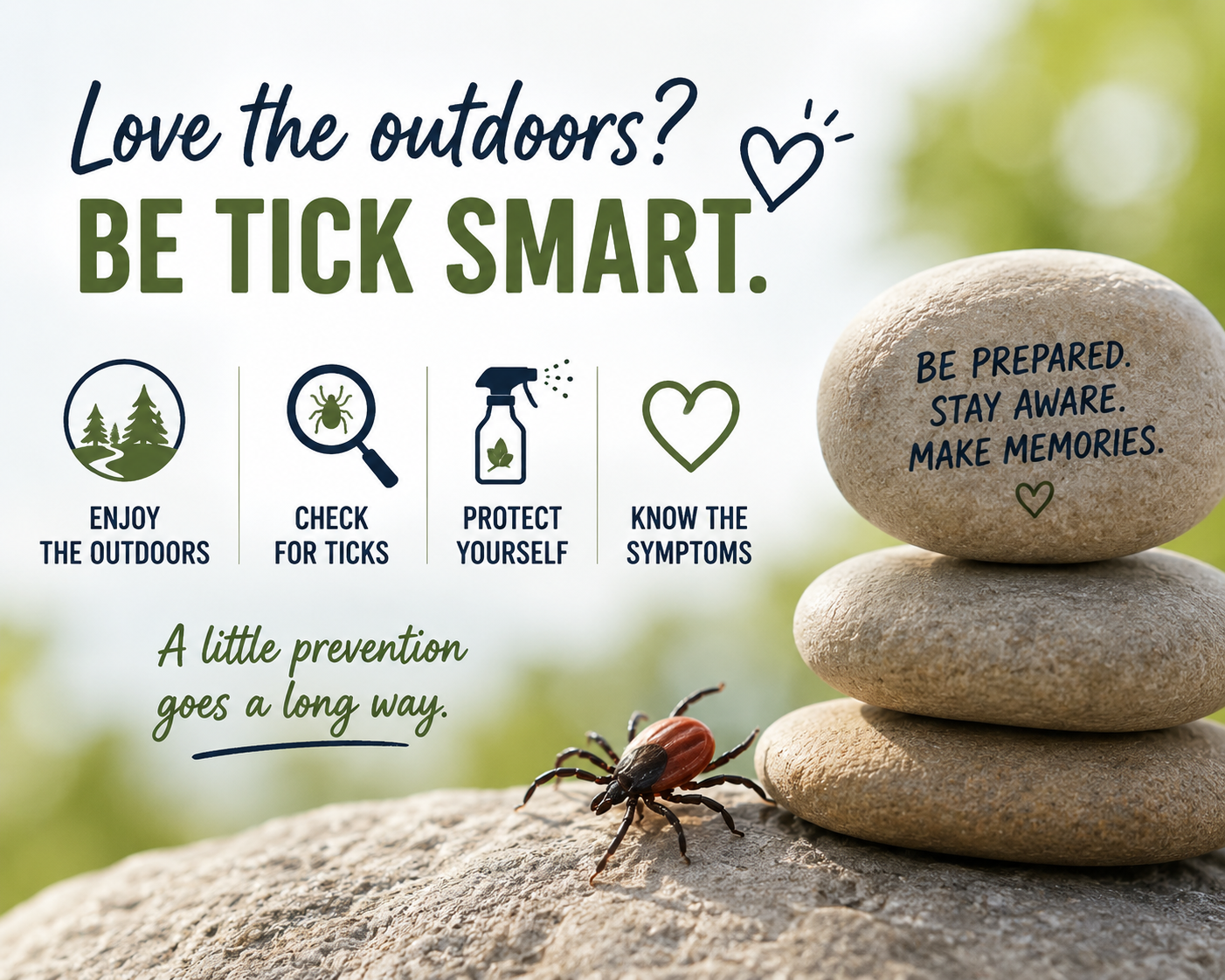
Whether you’re hiking, gardening, camping, golfing, or simply walking through tall grass, tick bites can happen.
In fact, we just removed a tick from our son’s head two weeks ago. And in the last week alone, I’ve had three patients plus a handful of friends and family members reach out after finding ticks.
The question is almost always the same:
“Do I need treatment?”
“Am I going to be okay?”
Admittedly, even I got a little nervous when we found the tick on my son’s head—and I’m a doctor, and certainly not new to removing ticks. When it comes to our kids (or ourselves), it’s easy for anxiety to creep in.
So, I thought this would be a good time to share a little practical wisdom because we’re just getting started with tick season here in Michigan.
Here’s the good news:
Most tick bites do not lead to Lyme disease.
And knowing what to look for, when to worry, and what to do next can help you stay safe without unnecessary panic.
Let’s walk through what you actually need to know.
How to Avoid Tick Bites
The best treatment is prevention. Here are a few simple ways to lower your risk:
Cover exposed skin
When hiking or spending time in wooded or grassy areas:
- Wear long sleeves and long pants
- Tuck pants into socks if walking through tall grass
- Wear light-colored clothing so ticks are easier to spot
Use insect repellent
Look for repellents that contain:
- DEET (safe when used as directed)
- Picaridin
- Permethrin-treated clothing (for hiking/camping gear)
Stay on the trail
Ticks tend to live in:
- Tall grass
- Brush
- Leaf piles
- Wooded edges
Try to avoid brushing against vegetation when possible.
Do a tick check after being outdoors
Ticks often hide in warm, hidden areas like:
- Behind the knees
- Groin area
- Waistline
- Armpits
- Belly button
- Behind ears
- Scalp and hairline
Don’t forget to check children and pets too.
Shower after outdoor exposure
A shower within a couple hours of coming indoors can help wash away unattached ticks and gives you a chance to check your skin.
Found a Tick? Don’t Panic.
If you discover a tick attached to your skin, remove it as soon as possible.
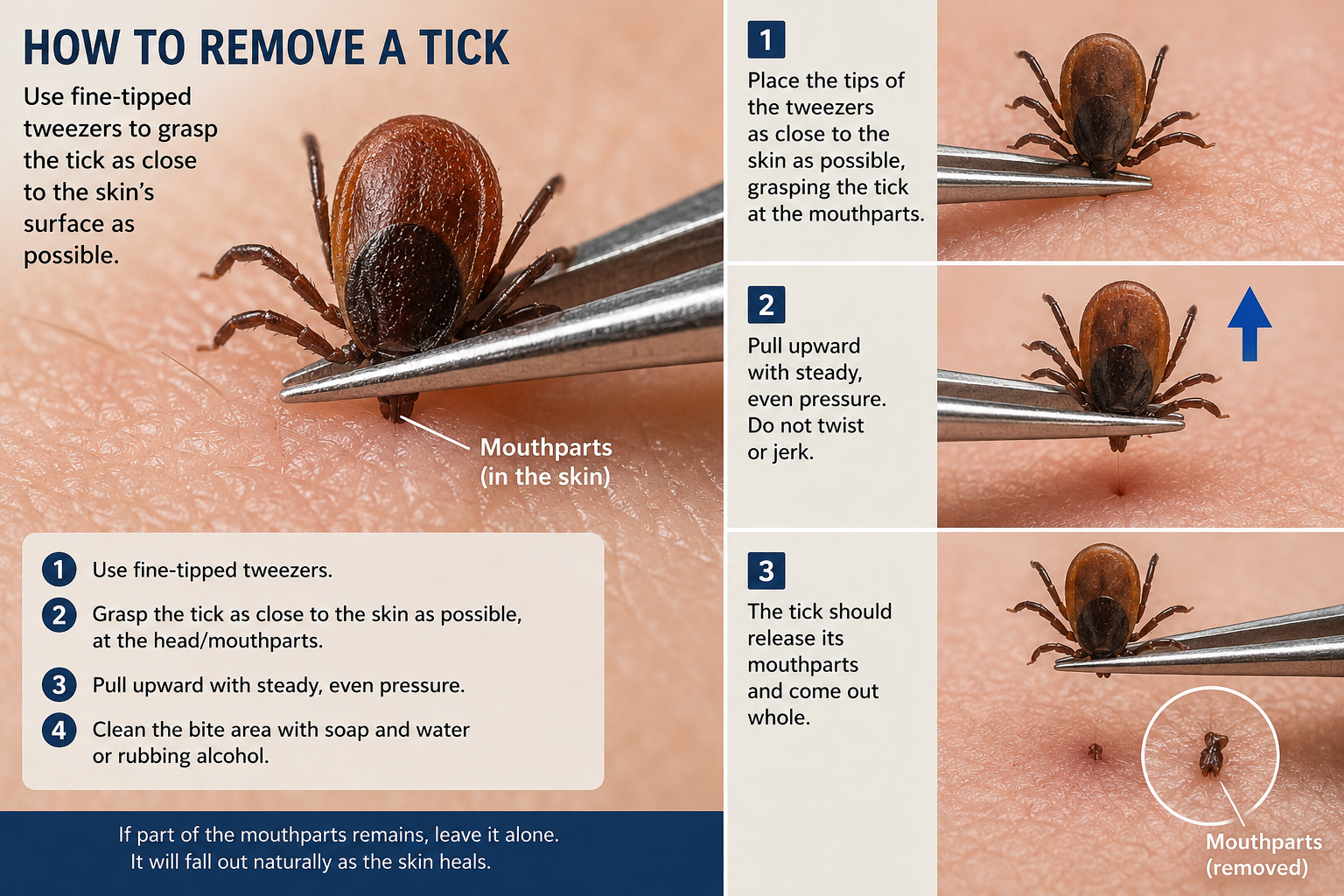
How to Remove a Tick Safely
- Use fine-tipped tweezers
- Grab the tick as close to the skin as possible
- Pull upward with steady, even pressure
- Clean the area with soap and water or rubbing alcohol
Avoid:
❌ Burning it off
❌ Smothering it with petroleum jelly or oils
❌ Twisting or crushing the tick
These methods may increase irritation and are less effective.
If part of the mouthpiece remains, don’t panic—it often works its way out naturally as the skin heals.
How Do You Know If a Tick Has Been Attached Too Long?
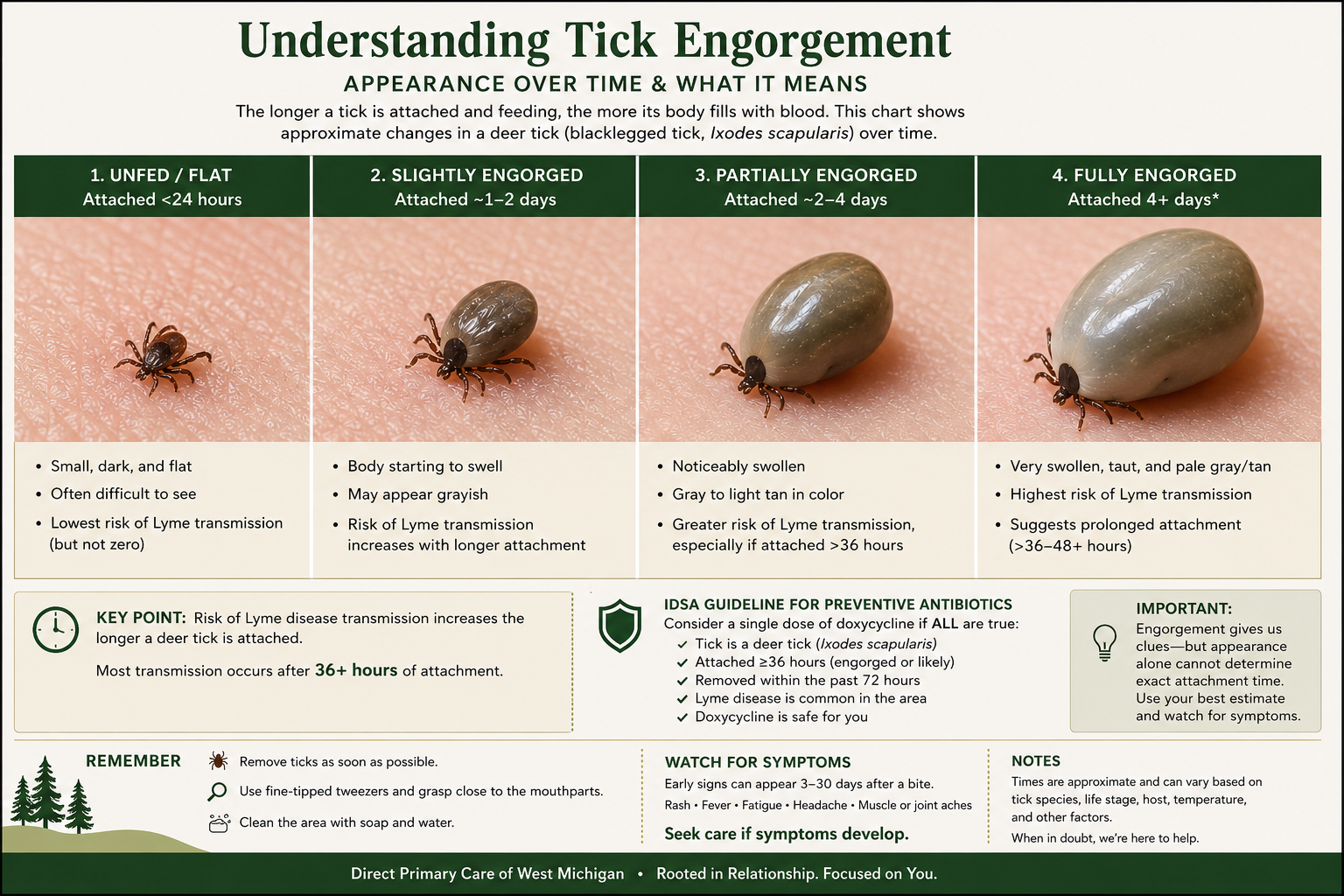
This matters because Lyme disease transmission usually requires prolonged attachment.
A tick is more concerning if:
- It appears swollen or engorged (bloated with blood)
- You believe it has been attached for more than 36 hours
- It is a blacklegged tick (deer tick), the type that carries Lyme disease
In general, the risk of Lyme disease rises significantly after about 36 hours of attachment.
A flat, tiny tick that was removed quickly is much less concerning.
When Should You Take Preventive Antibiotics?
According to infectious disease guidelines, preventive antibiotics are only recommended in certain situations.
A single preventive dose of doxycycline may be recommended if ALL of the following are true:
✓ The tick is likely a deer tick (blacklegged tick)
✓ The tick was attached for 36 hours or more (or appears engorged)
✓ The tick was removed within the past 72 hours
✓ Lyme disease is common in the region where exposure occurred
✓ You can safely take doxycycline
If these criteria are met, the recommended treatment is:
Doxycycline 200 mg by mouth one time (adults)
For children, dosing is based on weight.
If the tick was attached for only a short time or was removed quickly, antibiotics are usually not necessary.
Watch for Symptoms of Lyme Disease
Symptoms can appear days to weeks after a tick bite.
Common early signs include:
The classic rash
A spreading rash called erythema migrans:
- Often looks like a “bull’s-eye,” but not always
- Usually expands over time
- Often not painful or itchy
Not everyone gets the classic rash.
Flu-like symptoms
- Fatigue
- Fever
- Chills
- Headache
- Muscle aches
- Joint pain
- Swollen lymph nodes
Later symptoms (if untreated)
Weeks to months later, Lyme disease can sometimes cause:
- Facial drooping (Bell’s palsy)
- Severe fatigue
- Joint swelling (especially knees)
- Nerve symptoms
- Heart rhythm issues (rare)
When Should You Seek Care?
Reach out to a healthcare provider if:
- You think a tick was attached more than 36 hours
- The tick was engorged
- You develop a rash
- You begin having flu-like symptoms after a bite
- You’re unsure whether preventive treatment is appropriate
The bottom line: Most tick bites are manageable and do not lead to Lyme disease. Quick removal, paying attention to symptoms, and knowing when to seek care can go a long way in keeping you safe this tick season.
Questions after a tick bite? We’re happy to help guide you.
The information shared by Direct Primary Care of West Michigan is for educational and informational purposes only and should not be considered medical advice. Reading this content does not establish a physician-patient relationship and should not replace consultation with your healthcare provider regarding your specific medical concerns.