


I know, I know… we already talked about fiber.
But after enough conversations in clinic about constipation, bloating, cholesterol, blood sugar, and “why am I hungry all the time?” — here we are again.
The truth is, most Americans only get about 10–15 grams of fiber per day, far below what our bodies actually need.
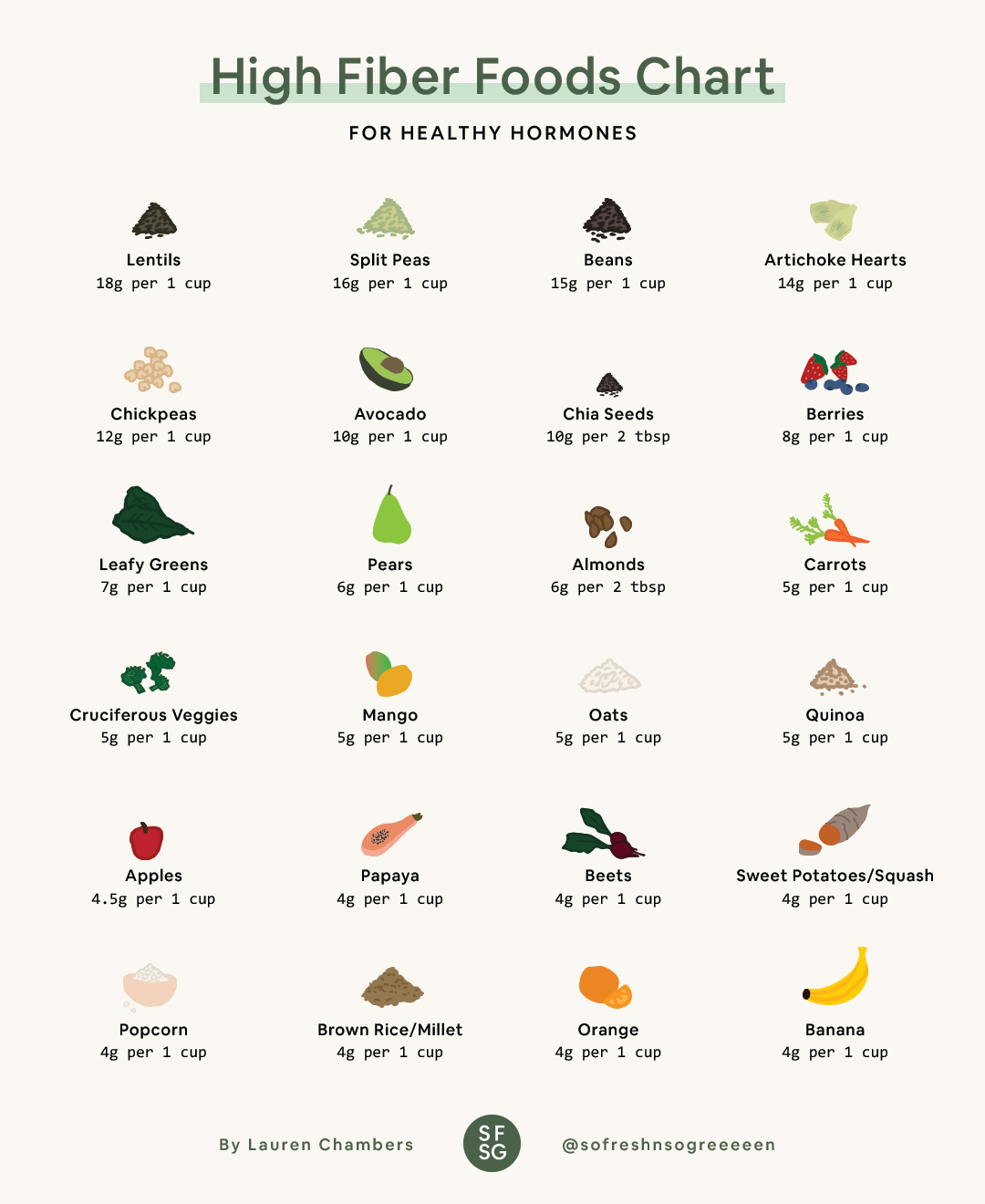
Instead of another lecture, here’s your quick fiber cheat sheet.
How Much Fiber Do You Actually Need?
Women
- Age 19–50: 25 grams/day
- Age 50+: 21 grams/day
Men
- Age 19–50: 38 grams/day
- Age 50+: 30 grams/day
Why the difference after age 50?
Fiber recommendations are partly based on calorie needs, which tend to decrease with age. But fiber does not become less important—in fact, it often becomes more important for constipation prevention, cholesterol, blood sugar balance, and gut health.
What About Kids?
Parents ask me this all the time—especially when constipation, picky eating, or tummy aches become a struggle.
The good news? You don’t have to obsess over counting grams.
The American Academy of Pediatrics offers two easy ways to think about fiber for kids:
1. “Eat 5”
If your child is eating at least 5 servings of fruits and vegetables daily, along with other fiber-rich foods like whole grains, beans, nuts, or seeds, there is usually no need to count fiber grams.
2. “Add 5”
If you like numbers, a simple rule of thumb is:
Child’s age + 5 = daily fiber goal
Examples:
- 5-year-old → ~10 grams/day
- 8-year-old → ~13 grams/day
- 10-year-old → ~15 grams/day
The general upper goal of around 25 grams/day can be used for older children and teens.
For a helpful, parent-friendly guide, check out the American Academy of Pediatrics’ article:
“Kids Need Fiber” article on HealthyChildren.org
Why Do I Keep Bringing Up Fiber?
Because fiber quietly helps with so many things we talk about in primary care every day:
✔️ Constipation & bloating
✔️ Cholesterol & heart health
✔️ Blood sugar & insulin resistance
✔️ Feeling full longer
✔️ Gut microbiome diversity
✔️ Hormone metabolism
Easy Ways to Get More Fiber (Without Overthinking It)
Try one small change:
- Add berries or chia seeds to breakfast
- Add beans to soups, tacos, or salads
- Choose oats instead of sugary cereal
- Add one extra vegetable at dinner
- Swap white grains for whole grains when you can
Small changes count.
Want to Look Up Fiber in Foods?
A few reliable places to start:
- USDA FoodData Central — search almost any food for exact fiber content
- Mayo Clinic High-Fiber Foods Chart — easy patient-friendly list of fiber-rich foods
The Bottom Line
So yes… fiber again. 😄
Because even small increases in fiber can make a meaningful difference in digestion, fullness, cholesterol, blood sugar, and overall health.
Start small. Stay consistent. Your gut will thank you.